David Kuckhermann played a Solo using a couple of Hangs at the Royal Albert Hall (Opening for Dead Can Dance). He’s even doing pitch bending. Incredible.
His homepage provides more material, including percussion tutorials.

David Kuckhermann played a Solo using a couple of Hangs at the Royal Albert Hall (Opening for Dead Can Dance). He’s even doing pitch bending. Incredible.
His homepage provides more material, including percussion tutorials.
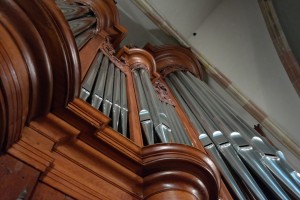
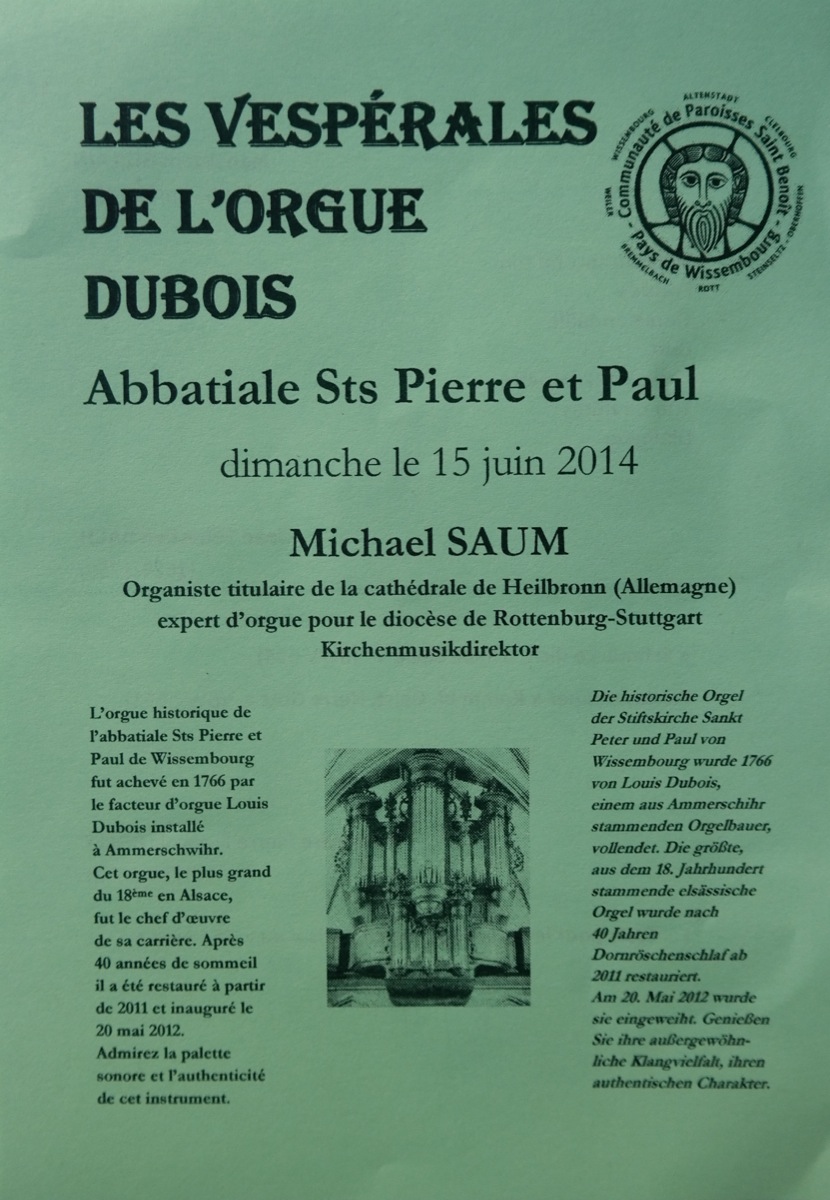
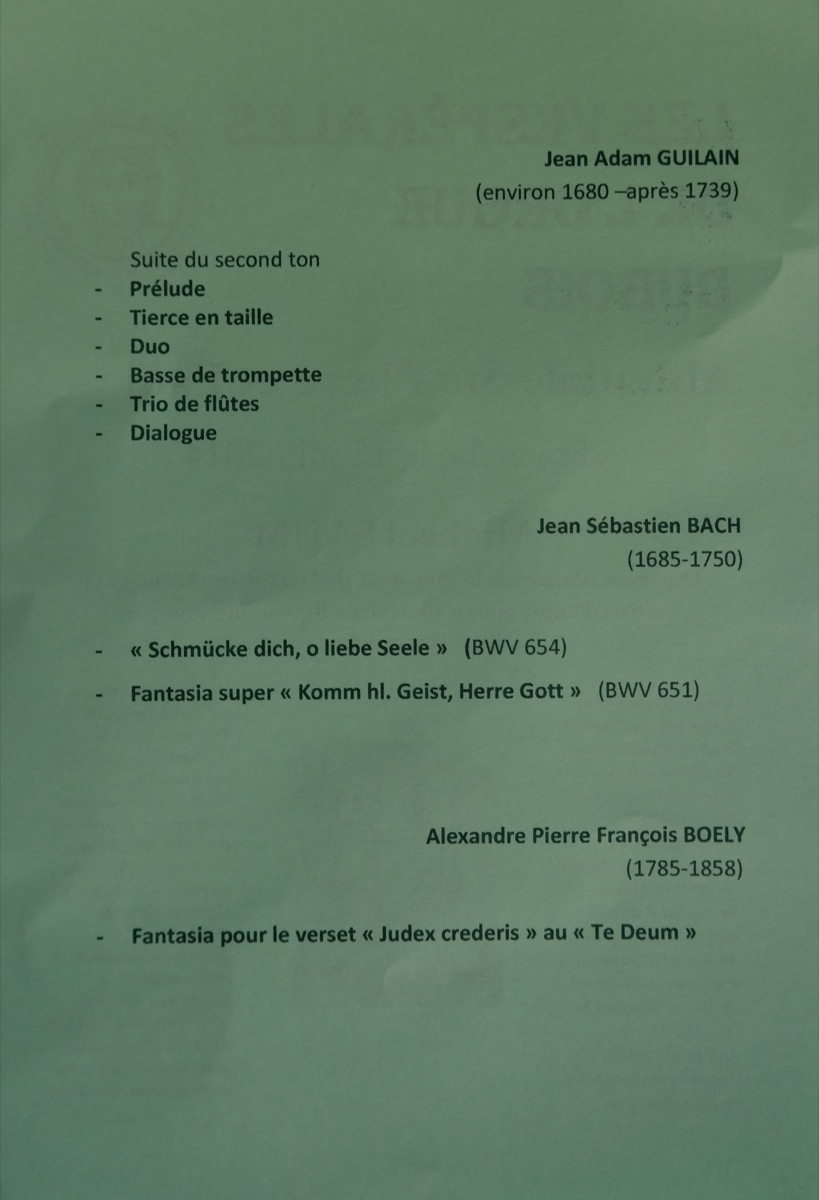
The organ vespers continue in 2014. Today Michael Saum played the pieces listed below. As always, we enjoyed every single minute of the concert.
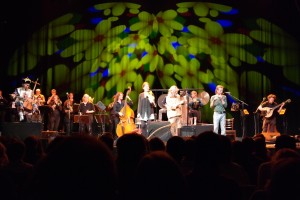
Paid by the city of Worms, Rüdiger Oppermann produced “The Brendan Voyage – Reise in die Anderwelt”, which was presented at Tollhaus yesterday, well, a couple of minutes ago :) .
We enjoyed the concert as we did concerning the other Oppermann concerts during the last years. I’d like to thank the Tollhaus and Rüdiger for the ongoing great collaboration.
Before the concert, Rüdiger shared some insight of the european history. He stated that the proselytization of the Upper Rhine Plain, including the monastery of Wissembourg, didn’t happen caused by Rome, but by irish people. His next project will thus concentrate on the early music of this area rather than bringing us music from all over the world.
I’m eagerly waiting of what Rüdiger will bring us during the next year.
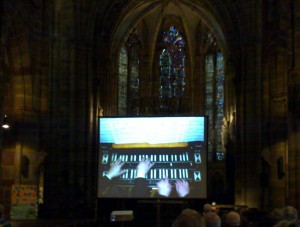
Two years after its inauguration, an outstanding concert took place at Wissembourg. Pascal Reber and Markus Eichenlaub played ancient to contemporary respectively jazzy pieces. Cameras have been installed to grant the audience insight on what was happening live at the organ’s console.

John Bowen Solaris (by Brandon Daniel from Sunnyvale, CA, USA, via wikimedia commons)
As the synth addict I am, I’m completely overwhelmed by the machine John Bowen has designed. I had no occasion yet to put my hands on a real device. However, musictrackjp provides a great overview, regardless I do not understand japanese :) .
Even via the internet, one senses the organic character of its audio engine, e.g. by listening to the string sounds. In case you’re after a machine providing aggressive solo sounds, the fun starts at 10:30. If you know how to recreate this mooguesque sound using an Access Virus, a Korg Z1, or a Korg Kronos, please let me know.
The device emulates components (oscillators, filters) of several classic synthesizers from Sequential Circuits, Oberheim, Moog, and Waldorf. The latter emulation provides the original wavetables of the Microwave, which I sold about three years ago. A unique selling proposition are its two modulation rotors, which can be used for a lot of animations.
The price tag is almost 4k €, and it usually requires preordering. A lot of money for »just another subtractive synth«, though I presume it is worth every ¢.
nailmusic contributes a nice hommage to the Zawinul Syndicate via SoundCloud.
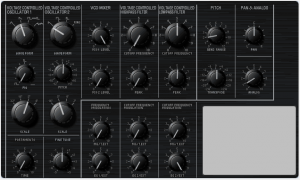
For quite a while now, Korg put a lot of efforts in resurrecting some of their legacy machines. This includes, for example, the Wavedrum, the Polysix, and the MS-20.
The Kronos includes the latter two as software engines. While the emulations sound pretty good, I have a hard time getting used to the MS-20 emulation, due to the behaviour of its second envelope generator. A couple of resources (like the ones here and here) shed a little light on the issue. There’s a wee small hint provided by the imprints of the patch panel.
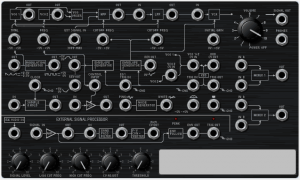
A closer look at the reverse output of envelope generator two indicates that the sustain stage of the envelope provides a voltage of 0 V.

As a consequence, increasing the sustain level will not increase the filter’s cutoff level as it does on many other machines. Instead, it decreases the filter’s level during the attack, hold, decay, and release stages.
Per default, with no patching implied, the envelope generator two affects both the amplifier as well as the filter cutoff. To dedicate the envelope generator two to the filter’s cutoff, simply patch envelope generator 1 to the initial gain parameter of the voltage controlled amplifier, VCA. This will decouple envelope 2 from the amplifier.
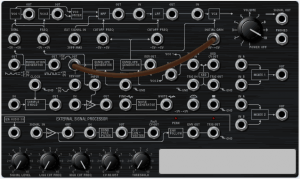
Envelope 1 now controls the amplifier, envelope 2 the filter cutoff only. To make the above behaviour audible, set the lowpass filter’s cutoff to about 50% and the EG2/Ext value (which basically means envelope amount) to about 80%.
Set the attack and decay times of envelope 2 to about 50% and listen to the output. The filter will open starting at about 50%, open completely and fall back to 50% during the decay stage. Feels familiar with me.
Remember the filter’s cutoff is set to 50%. Play a couple of short notes while raising the sustain level. Closely listen to the initial level of the filter at each note. It will fall below the cutoff set to 50% the more you raise the sustain level. This means to achieve the common behaviour of the sustain stage, adjusting it also requires adjusting the filter’s cutoff setting. At the same time, the decay will decrease, similar to other envelope designs.
I have no clue whether I got all the details right, but the above is what I think I understood so far. In case you find the behaviour annoying, leave envelope 2 alone and use the Kronos’ envelope generators 3 and 4 to control the filters.

On my way back from a private training, I heard that Paco de Lucia died aged 66 via Deutschlandfunk broadcasting (additional information). Though this is bad news, lets be deeply grateful for the outstanding work he did.
Thanks, Paco.
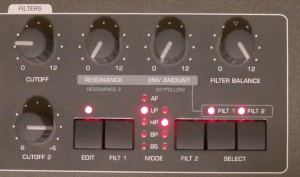
The Access Virus is a very flexible analogue modeling synthesizer. Besides its oscillators, the two filters contribute to its premium audio qualities.
General
The two filters can be used in two serial modes, a parallel mode, and a split mode. Filter 1 can be used in both 12 and 24 dB modes. It also provides filter saturation or analogue modeling types.
A depiction of the filter modes (Serial 4, Serial 6, Parallel, Split) can be found here.
Since its early incarnations, the Virus provides an (in)famous parameter called »Filter Balance«. At a first glance it is difficult to understand what it does exactly, depending on the abovementioned modes. The manual only sheds little light on what it does exactly. I hope the following description helps to unveil its potential.
Filter Balance in Split Mode
Filter Balance in Parallel Mode
Filter Balance in Serial modes
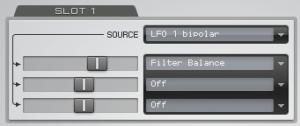
It took me a while to understand the latter behaviour, since I thought in terms of simple analogue circuits respectively the routing of the filters as found in the Korg Z1. The actual behaviour of the Balance knob is more complex than just being a simple balance control. The way it is implemented provides a very musical approach, though. Even more when taking into account that the parameter is controllable via the modulation matrix, e.g. using an LFO.
Yesterday Mohammad played live at Tollhaus, Karlsruhe. It was quite impressive to hear what sounds he is capable of playing on the instruments (like the Tombak or a frame drum). I tried to follow what he was doing with the hands and what was heard through the PA, and I sometimes got the impression that some looping device must be involved. But only Mohammad knows whether I’m right :) .
Initially I thought that a concert with drums alone would be interesting, but only for about half an hour. I was wrong. The 90 minutes of the concert passed like it were seconds. Take this as a recommendation.
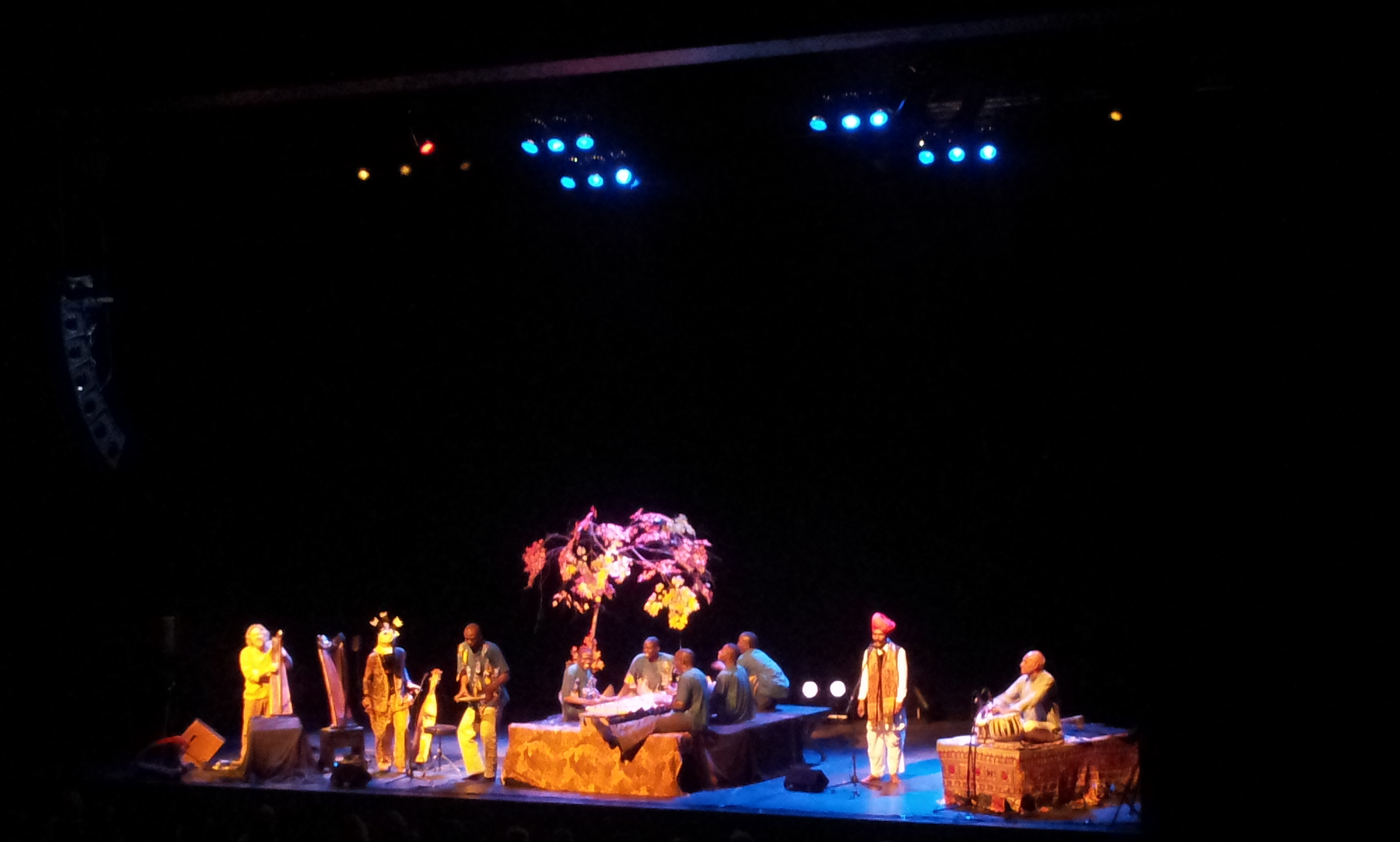
Once again we attended the annual Klangwelten concert which took place for the 27. time this year. Musicians included:
Due to an intense working day, I was a bit late, but we decided to attend anyway and didn’t regret. In case you get the chance to visit one of the concerts, do not hesitate.
Am Samstag hatten wir die Gelegenheit, die Dubois-Orgel in Wissembourg aus der Nähe zu betrachten, während die Organistin die ein oder andere spannende Geschichte über die Restaurierung zu erzählen wusste.

Keyboard Magazine shares an article about George Duke’s pitch bending techniques. Don’t miss the embedded sound cloud audio at the bottom of the page.
I agree that applying vibrato via the pitch bender is a great technique. However I’ve never tried to set the bend range to a fourth and playing the intervals in between via the bender. And the tip with bending two semitones up and then playing the note below on a monophonic synth was very insightful.
BTW: I’m pretty impressed by the sound of the Arturia mini V software emulation of the Mini Moog. It seems to be rather close to the original with its marvellous unique waveforms.
Thanks Jerry.
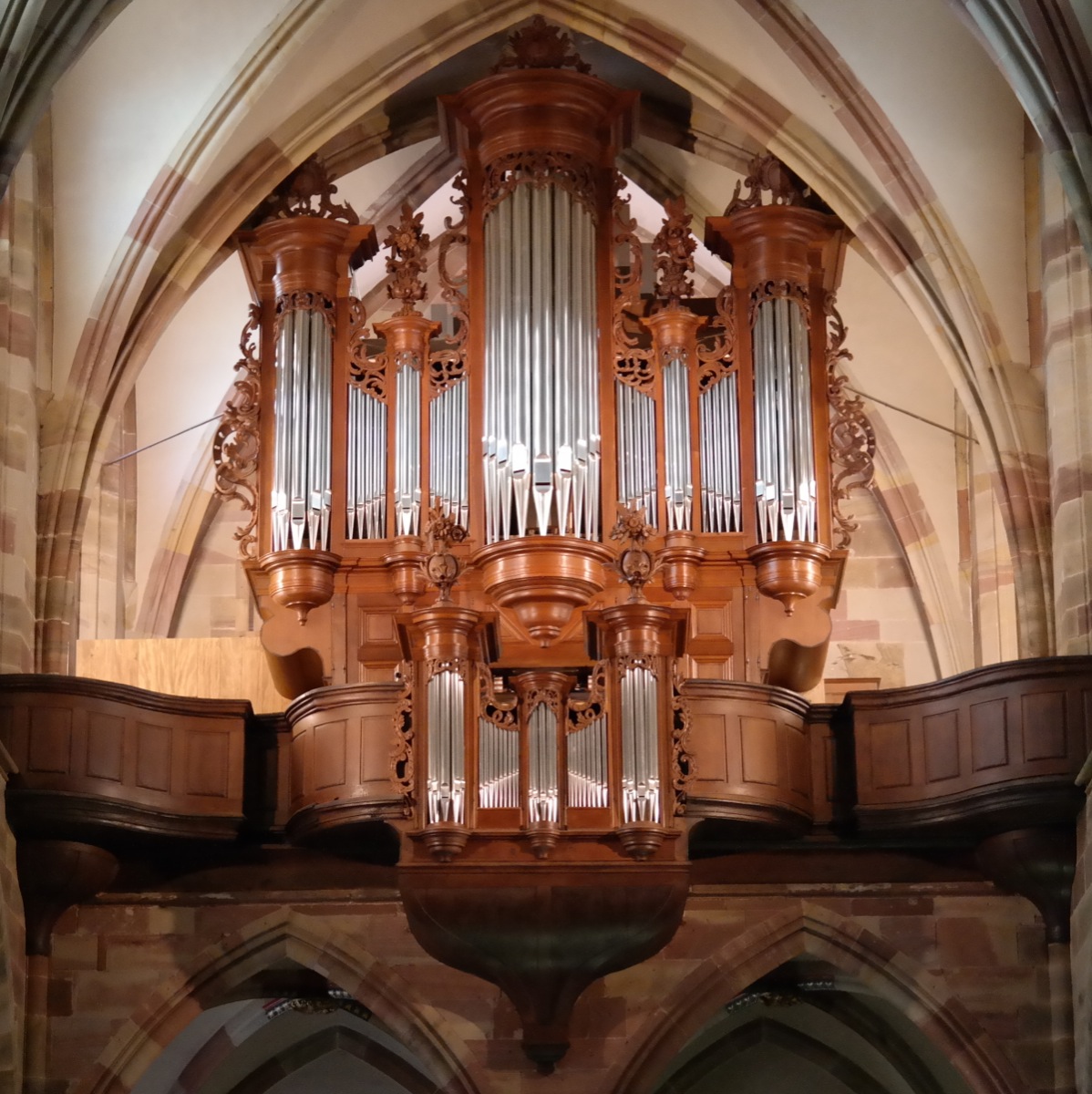
Today the last concert of the vesper series on the Dubois organ at Wissembourg took place. Pierre-Alain Clerc played the following pieces:
As last year, I’d like to express my gratitude to all who helped to make the series happen, such as the artists playing though no salary was granted, all the helping hands behind the scenes, and last but not least Denise and Thomas Becker for their continued efforts.
Don’t miss the »Concert spirituel “Te Deum Laudamus” du 6 octobre 2013 en l’abbatiale Sts Pierre et Paul par le Bruchsaler Barockensemble et 150 choristes de la région de Karlsruhe« (PDF).
Today Quentin Guerillot played the following pieces:
Jean Adam Guilain (ca. 1680-1739) – Suite du 2ème ton
Claude Bénigne Balbastre (1727-1799)
Charles Tournemire (1870-1939) – Suite évocatrice
Bengt Hambraeus (1928-2000) – Livre d’orgue
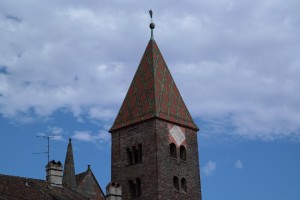
Today Marc Huck (organ), Caroline Huck-Hiebel (organ), and Eric Hiebel (trumpet) played the following pieces:
Today Lydia Schimmer played the following pieces on the Dubois organ:
This concert was quite different:
I got the impression that Lydia Schimmer has carefully chosen pieces matching the instrument quite well – thanks for the efforts, we enjoyed every single minute!
Today Thomas Kientz played the following pieces on the Dubois organ:
Due to the warm weather the city of Wissembourg was not as crowded as on other sundays. The concert was of great joy and pleasure as always :) .
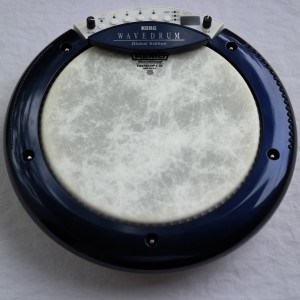
I try to play the Wavedrum frequently. I mainly use the finger tips for playing rather than the palm (or even sticks). Unfortunately I did not pay attention to my finger nails, which scratched the original head quite heavily.
As a consequence, I needed to replace the head. As advertised by Korg, I’ve chosen the Remo Ambassador Fiberskyn3 10“ (model FA-0510-00). Replacement is simple. Just remove the 5 screws, turn the rim to the right (gently, so that the cable between the rim and the body does not get damaged), replace the head, put the rim in place and insert the five screws. The manual describes how to tighten them and how to calibrate the sensors.
While calibrating the rim sensitivity, one may be tempted to set the low value to 0 instead of something like 7. This leads to some hiss coming out of the Wavedrum though.
The next couple of days will show whether the Remo is more resistent than the original head :) .
This year the vespers at Wissembourg are continued. Today Heinrich Grimm played the following pieces:
A friend of mine who attended for the very first time was quite impressed :) .